

Key Takeaways
The Great Lakes
The Great Lakes - Superior, Michigan, Huron, Erie, and Ontario - form the largest group of freshwater lakes on Earth by total area, straddling the U.S.-Canada border across eight American states. Together they contain roughly 21% of the world's surface fresh water and span more than 10,000 miles of coastline. For travelers, they offer everything from sand dunes and sea-stack cliffs to historic lighthouses, vibrant port cities, and island escapes - with none of the transatlantic airfare.
Hydrologists classify them as a single interconnected system; water flows from Superior through Michigan-Huron, Erie, and finally Ontario before draining into the St. Lawrence River.
Lake Superior: Wild, Cold, and Deeply Humbling
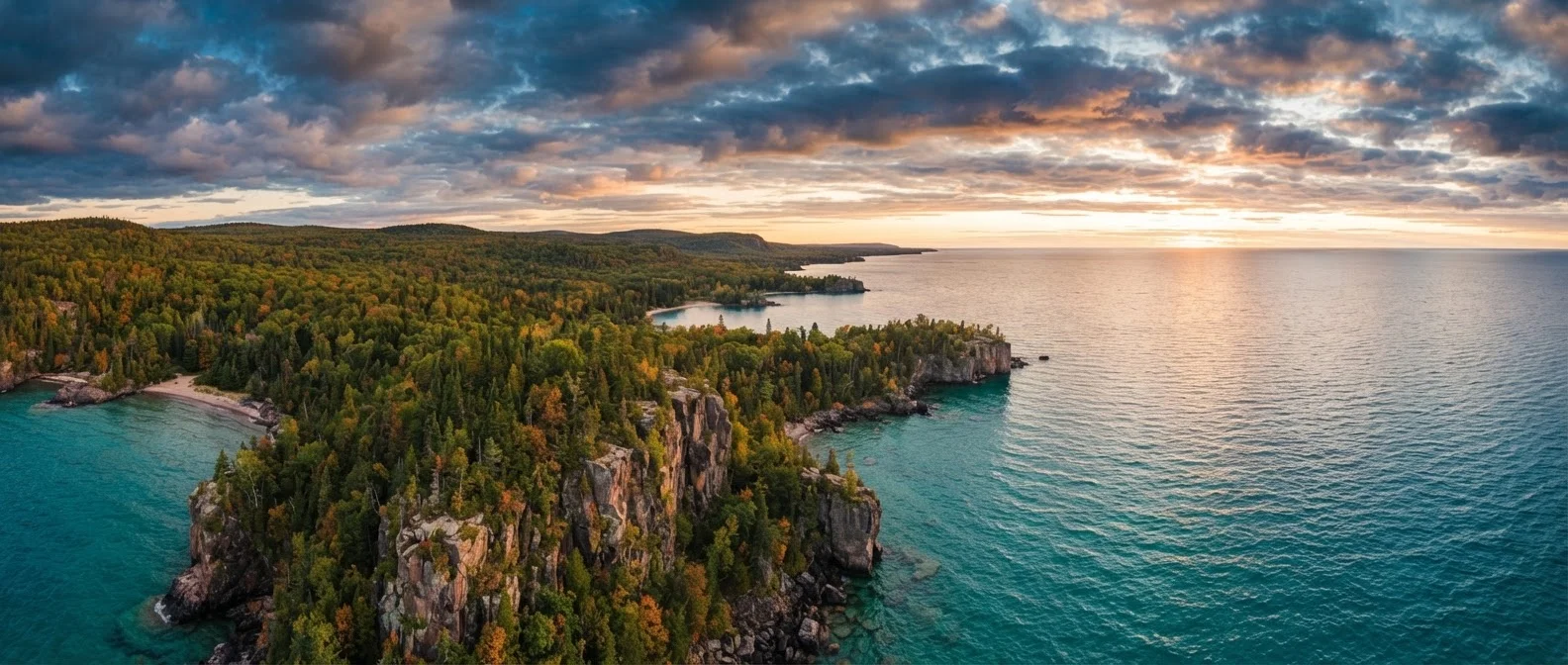
No lake in the world holds more fresh water by volume than Superior, and standing on its shore makes that statistic feel earned. The Pictured Rocks National Lakeshore in Michigan's Upper Peninsula presents sandstone cliffs streaked in orange, pink, and green - colors caused by mineral seepage - rising up to 200 feet above water so clear you can see 20 feet down on a calm day. Apostle Islands National Lakeshore in Wisconsin offers sea caves and historic lighthouse tours that rival anything you'd find on the New England coast.
Superior runs cold year-round, so most visitors come for hiking, kayaking, and photography rather than long swims. The lake's remoteness is its draw: stretches of shoreline accessible only by water, sky dark enough for genuine stargazing, and the kind of quiet that's genuinely hard to find east of the Rockies.
Lakes Michigan and Huron: Dunes, Peninsulas, and Island Life
Lake Michigan is the one most Americans have encountered, even if they don't always realize it. Indiana Dunes National Park - the nation's 61st and most recently designated national park at time of designation - anchors the southern end with 15 miles of beach and dunes climbing 200 feet. Further north, Sleeping Bear Dunes National Lakeshore in Michigan regularly draws comparisons to coastal scenes found much farther from home.
Michigan's Door County peninsula in Wisconsin juts into Lake Michigan like a thumb, offering cherry orchards, ferry rides to Washington Island, and a dense collection of lighthouses. Mackinac Island, sitting where Lakes Michigan and Huron meet, bans motor vehicles entirely - getting around means bikes, horses, or your own feet, which turns out to be exactly the right pace for a place built on Victorian-era fudge shops and fort history.
“The Great Lakes are to the Midwest what the mountains are to the West - a defining natural feature that shapes culture, economy, and identity in ways that outsiders consistently underestimate until they actually see them.”
— Jerry Dennis, Author of 'The Living Great Lakes,' a widely read natural history of the region
Lake Huron's Georgian Bay region (on the Canadian side) and Michigan's Les Cheneaux Islands offer quieter, island-hopping experiences for travelers who've already worked through the obvious highlights.
Lakes Erie and Ontario: History, Wine, and Waterfalls
Erie is the shallowest of the five lakes, which means it warms fastest in summer - making it the most swimming-friendly. Ohio's Lake Erie islands, particularly Put-in-Bay and Kelleys Island, run ferry services from multiple mainland ports and offer a genuinely relaxed summer pace. The lake's southern shore also sits at the center of some serious American history: the Battle of Lake Erie in 1813 was a turning point in the War of 1812, and Perry's Victory and International Peace Memorial on South Bass Island tells that story well.
Ontario is the smallest lake by surface area but punches well above its weight. Niagara Falls sits at its eastern outflow - which needs no introduction - but the broader Niagara Escarpment rewards slower exploration. Ontario's wine country along the Niagara Peninsula produces cool-climate varietals, particularly ice wine, in quantities that surprise most first-time visitors. Note that the Canadian side of the lake requires a valid U.S. passport; verify current entry requirements through official government channels before booking.
Time Your Great Lakes Visit Strategically
The window from late August through mid-October offers some of the most rewarding conditions: lake temperatures are at their annual peak for swimming, summer crowds have thinned noticeably, and fall foliage begins painting the shoreline forests. Many lakeside towns also shift to shoulder-season pricing after Labor Day, and ferry services to islands like Mackinac and the Lake Erie islands typically run through October.
Planning a Great Lakes Trip: What to Know First
The region's sheer size means most visitors focus on one or two lakes per trip rather than attempting all five. A useful first step is deciding which type of experience you're after: rugged wilderness and paddling (Superior), classic beach towns and dunes (Michigan), history and accessible islands (Erie), or wine country and waterfalls (Ontario).
Summer draws the largest crowds to lakeside towns, but early fall is widely considered the sweet spot - warm enough for outdoor activities, cool enough to avoid the peak July heat, and visually spectacular once the hardwood forests shift color. If you're weighing a Great Lakes trip against a classic coastal alternative, consider that the crowd calculus is genuinely different here; even on a busy summer weekend, the sheer scale of the coastline means finding an uncrowded stretch is entirely realistic. For travelers accustomed to planning around peak season elsewhere - like those weighing the trade-offs of off-peak Hawaii - the Great Lakes offer a refreshingly different set of seasonal considerations.
10,900+
Miles of U.S. Great Lakes coastline
According to NOAA, the U.S. shoreline of the Great Lakes totals more than 10,900 miles - exceeding the combined length of the U.S. Atlantic and Gulf coasts.
21%
Share of world's surface fresh water
The Great Lakes hold approximately 21% of the world's surface fresh water supply, according to the U.S. Environmental Protection Agency.
62nd
Indiana Dunes designation year (2019)
Indiana Dunes became the 61st U.S. national park in February 2019, drawing significant new visitor attention to the southern Lake Michigan shore.
4 hrs
Drive time from Chicago to Sleeping Bear Dunes
Sleeping Bear Dunes National Lakeshore in Michigan sits roughly four hours from downtown Chicago, making it a practical long-weekend destination for millions of Midwesterners.