

Key Takeaways
The Real New Orleans Starts Beyond the Neon
Bourbon Street has its charms - and its crowds, its $15 hurricanes, and its particular brand of organized chaos. But New Orleans is a city of layers, and the neighborhoods radiating out from the French Quarter are where those layers become something genuinely extraordinary. From second-line parades echoing through Tremé to the indie art galleries of Bywater, these districts don't perform for tourists - they simply live, loudly and beautifully, on their own terms.
Whether you're planning a first visit or returning for a deeper look, exploring these neighborhoods transforms a standard vacation into something far more meaningful. Here's a guide to the districts that locals are proud to call home.
Tremé: Where New Orleans Music Was Born
Just a few blocks from the French Quarter - but a world apart - Tremé (pronounced treh-MAY) is widely regarded as the oldest African American neighborhood in the United States. It is the spiritual and historical heart of New Orleans jazz, the birthplace of second-line parade culture, and home to Congo Square, where enslaved people gathered on Sundays to maintain African musical traditions that would eventually shape American music as we know it.
Walk down St. Claude Avenue on a weekend and you're likely to encounter a brass band in full swing. The neighborhood's bars and music venues operate at a human scale - small, intimate, and deeply community-rooted. Tremé is also the backdrop for important local institutions, including the St. Augustine Church, one of the oldest African American Catholic parishes in the country.
Tremé is the birthplace of jazz culture and the heartbeat of New Orleans' African American heritage.
Marigny and Bywater: Creole Bohemia
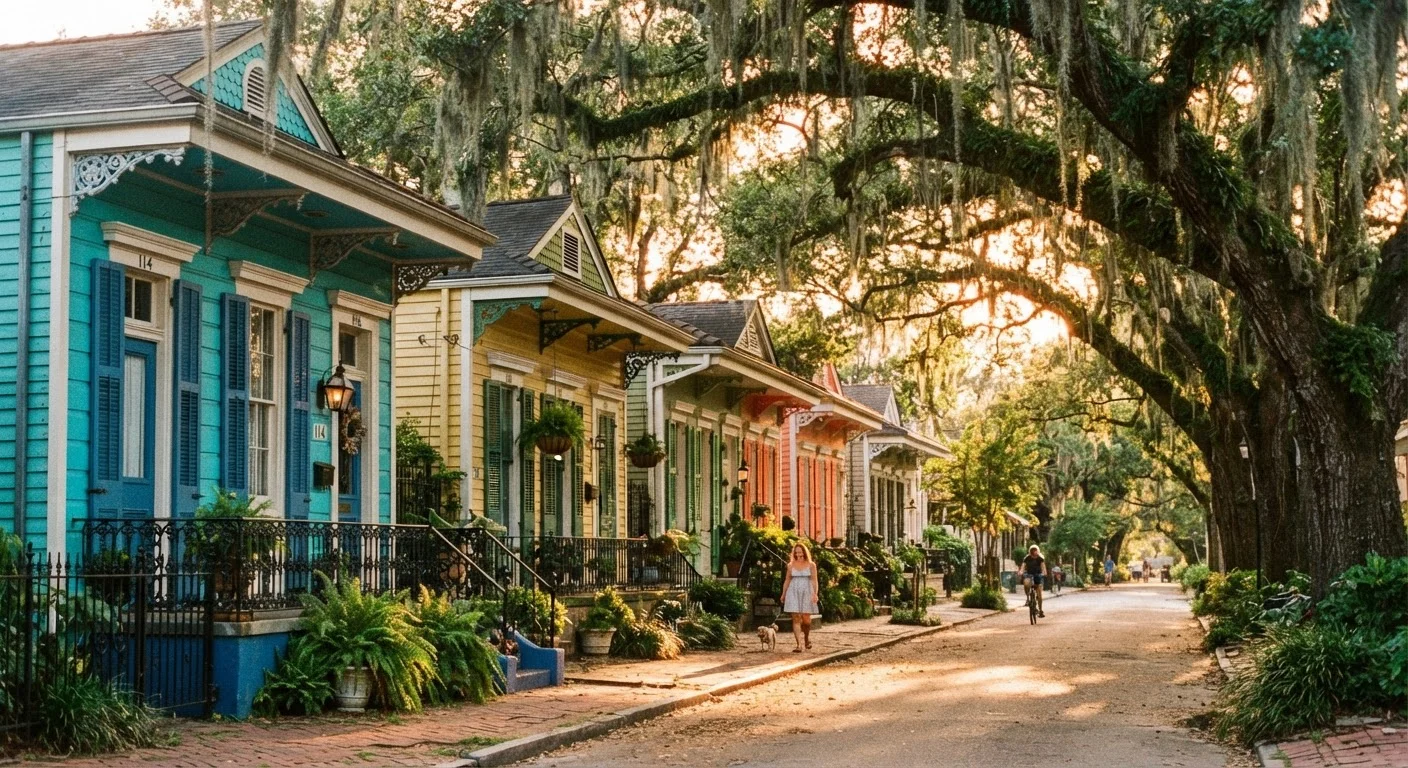
Immediately downriver from the French Quarter, the Faubourg Marigny and its neighbor Bywater form a creative corridor that has attracted artists, musicians, and independent spirits for decades. The architecture here is a feast - rows of Creole cottages painted in tropical hues, iron-lace galleries, and shotgun houses stretching narrow lots back from the street.
Frenchmen Street, Marigny's main artery, is where serious music lovers go instead of Bourbon Street: multiple venues within a single block offer live jazz, blues, and funk with no cover charges and a crowd that actually listens. Bywater has evolved into a hub for galleries, plant shops, and inventive restaurants, but it retains a scrappy authenticity that resists over-polishing.
Frenchmen Street delivers serious live music in an intimate setting that Bourbon Street simply can't match.
Garden District: Antebellum Grandeur on Foot
Uptown from the Quarter, the Garden District unfolds like a living architectural museum. Greek Revival and Italianate mansions sit behind wrought-iron fences draped in jasmine and bougainvillea, their scale and ornamentation reflecting the ambitions of the American merchant class that settled here in the early 19th century. The neighborhood's name is literal - gardens are everywhere, overflowing onto banquettes (the local term for sidewalks).
The St. Charles Avenue streetcar drops you right into the district, making it one of the most accessible neighborhoods for visitors. Magazine Street, the commercial spine, runs through the area with a long stretch of independent boutiques, bookstores, and casual restaurants that serve neighborhood regulars alongside curious travelers.
The Garden District is a walkable showcase of antebellum architecture reached easily by the historic St. Charles streetcar.
Mid-City: Local Life at Its Most Genuine
Mid-City doesn't make many tourist itineraries, which is precisely what makes it worth visiting. Centered around City Park - one of the largest urban parks in the country, home to the New Orleans Museum of Art and centuries-old live oaks - Mid-City is where New Orleanians actually live their daily lives. Bayou St. John threads through the neighborhood, offering a quiet, shaded greenway popular with cyclists and kayakers.
The dining scene here skews local and unfussy: Vietnamese restaurants along Tulane Avenue, no-frills po'boy shops, and neighborhood bars where you'll share a barstool with a schoolteacher or a jazz musician between gigs. Mid-City is where you go to feel like a resident, not a guest.
Mid-City's City Park, bayou trails, and neighborhood restaurants offer an unfiltered view of everyday New Orleans life.
Algiers Point: A Ferry Ride to Another Era
Across the Mississippi River from the French Quarter, Algiers Point is one of the oldest neighborhoods in New Orleans and the only part of the city on the West Bank. The free ferry ride from the Canal Street terminal takes about five minutes and delivers you to a neighborhood that feels like New Orleans preserved in amber - quiet, residential, and largely undiscovered by casual visitors.
Victorian cottages and double shotgun houses line streets shaded by enormous oaks. There's a small but proud music and arts scene centered on Dry Dock Café and the surrounding blocks. The views back across the river toward the Quarter are among the most photogenic in the city. Algiers Point rewards visitors who are willing to wander without a agenda.
A free five-minute ferry ride delivers you to Algiers Point, a Victorian neighborhood with skyline views and almost no crowds.
Plan Your Neighborhood Exploration Wisely
A few practical notes before you set off: New Orleans' neighborhoods vary considerably in their walkability and lighting after dark, so it's worth researching current conditions before you go. The Regional Transit Authority's streetcar lines - particularly the St. Charles line - connect several of these areas efficiently and affordably. Neighborhoods like Mid-City and Gentilly are best explored with a car or rideshare, while Marigny and Bywater are compact enough to cover on foot or by bike.
Use the Streetcar to Connect Districts
The historic St. Charles Avenue streetcar runs from the Central Business District through the Garden District and into Uptown, making it one of the most practical - and scenic - ways to string together a multi-neighborhood day. The Rampart-St. Claude line connects the French Quarter edge to Tremé and the Marigny. A Jazzy Pass (the RTA's multi-day transit pass) covers both lines and can make neighborhood-hopping genuinely affordable. Verify current schedules and fares with the RTA before your trip, as service patterns can shift.
Food is an essential part of neighborhood identity here - resist the urge to eat every meal in the Quarter and instead follow the locals to corner groceries, Vietnamese po'boy shops, and neighborhood Vietnamese restaurants that have become institutions over decades. The city rewards the curious and the unhurried in equal measure.