

Key Takeaways
Why 'Europe' Is Too Broad a Plan
Ask most Americans planning their first overseas trip and they'll say something like, "We're doing Europe." It sounds exciting-and it is-but treating Europe as a single, uniform destination is one of the most common planning errors travelers make. The continent stretches from the Arctic Circle to the edge of North Africa, from the Atlantic seaboard to the borders of Asia. That's not a destination; it's a hemisphere.
The practical consequences show up fast. A traveler who packs light summer clothing for a July trip to Reykjavik and Edinburgh will shiver the whole time. Someone budgeting based on prices in Lisbon will be shocked by what dinner costs in Zurich or Oslo. And a visitor who expects the relaxed afternoon pace of Seville to match the brisk efficiency of Amsterdam will feel perpetually off-rhythm in both places.
The trip planning process only works when it's grounded in specifics. Europe rewards that specificity enormously-but it punishes vague assumptions just as consistently.
The Mistakes That Trip Up American Travelers
These aren't exotic oversights. They're patterns that show up again and again when travelers treat a continent like a country.
Assuming weather is mild and similar across the continent in summer.
Why it happens: Americans often picture Europe through Mediterranean imagery-sunshine, outdoor cafés, warm evenings-because that's what dominates travel marketing.
Treating the euro as Europe's universal currency.
Why it happens: Many of the most-visited countries use euros, so travelers assume the rest do too-until they arrive in Switzerland, Croatia before 2023, or the U.K. and discover otherwise.
Budgeting one daily spending estimate for the entire trip.
Why it happens: Travelers naturally average things out, but the cost gap between Western and Eastern Europe-or between Northern Europe and Southern Europe-is dramatic enough to blow a budget or leave money unspent.
Underestimating transit time between countries.
Why it happens: On a map, European countries look close together. Americans accustomed to large states forget that crossing from one country to another often involves border formalities, language shifts, and a full day of transit.
Ignoring local cultural norms and expecting uniform 'European' behavior.
Why it happens: Without prior exposure, it's easy to assume cultural similarity across countries that look geographically close on a map.
How to Research Europe by Region, Not by Reputation
The fix isn't complicated, but it does require shifting how you frame the planning question. Instead of asking "What do I want to do in Europe?" ask "What kind of environment, pace, and experience do I want-and which part of Europe actually delivers that?"
44
Countries in Europe
According to the United Nations, Europe comprises 44 countries, each with distinct governance, culture, and infrastructure that affects travelers directly.
24+
Official languages spoken across the EU alone
The European Union officially recognizes 24 languages, underscoring how dramatically communication, signage, and local customs shift across borders.
~3x
Cost difference between Europe's cheapest and most expensive destinations
Travel cost indices consistently show daily expenses in Northern Europe running two to three times higher than equivalent travel in Eastern European countries.
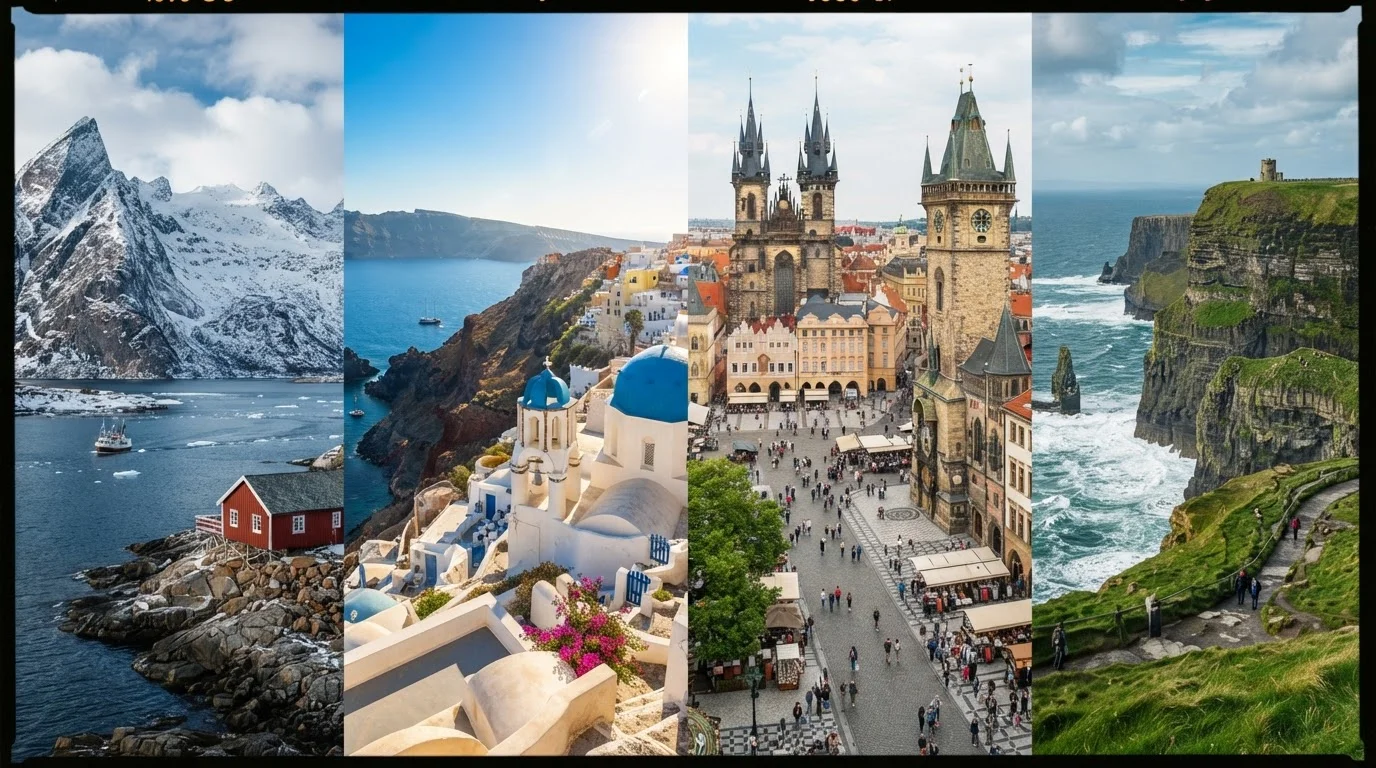
Northern Europe-Scandinavia, Iceland, the Baltic states-offers dramatic natural scenery, excellent public infrastructure, and a quieter cultural rhythm, but comes with a significantly higher cost of living that transfers directly to travel budgets. Western Europe's major hubs like Paris, Barcelona, and Amsterdam are culturally rich and well-connected, but also heavily touristed in peak season. Central and Eastern Europe-countries like Czechia, Slovenia, Hungary, and Poland-often provide comparable history and architecture at a fraction of the cost, with fewer crowds. Southern Europe's Mediterranean coast runs hot and dry in summer, ideal for beach travel, but some smaller towns effectively close during August or go into siesta mode that surprises visitors expecting constant activity.
Understanding these broad regional personalities-before you choose flights-is what separates a frustrating trip from a great one. See common first-timer mistakes for related planning pitfalls that catch travelers off guard before they even leave home.
Once you know the region, build your itinerary around realistic daily rhythms. The step-by-step itinerary guide walks through how to structure days that don't exhaust you by Tuesday. And if you're still deciding how tightly to schedule things, the fixed vs. open-ended travel comparison lays out the genuine trade-offs for each approach.