

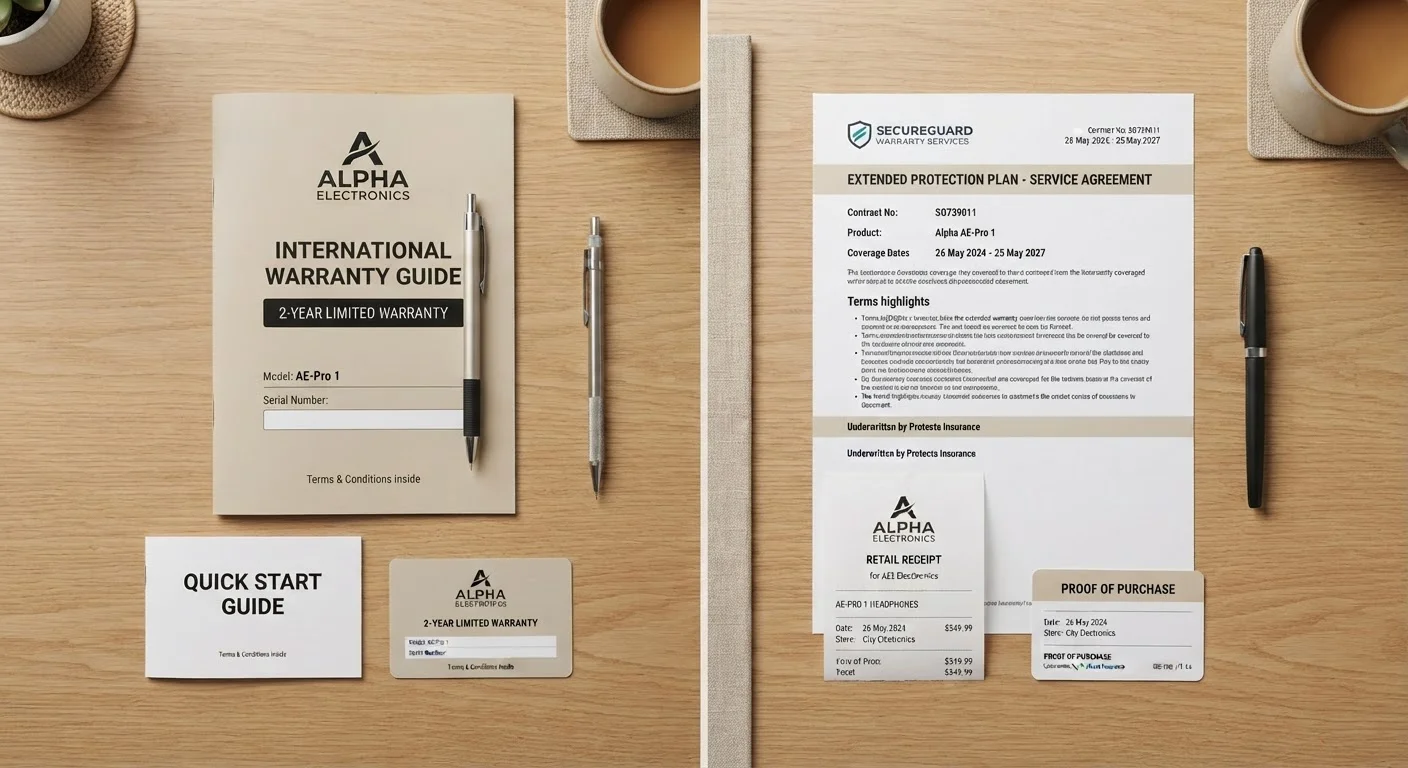
Key Takeaways
Option A
Manufacturer Warranty
The factory-backed promise that comes with what you buy.
Best for: Shoppers who want baseline protection against defects without additional cost or commitment.
Option B
Extended Warranty
A paid service contract that kicks in after the manufacturer coverage ends.
Best for: Buyers who want longer coverage on high-cost items and are willing to read the fine print carefully.
If you want no-cost defect protection right after purchase
Manufacturer Warranty
It is included in the purchase price, backed directly by the maker, and typically covers factory defects with straightforward claims.
If you own a high-cost appliance or electronics item past its manufacturer period
Extended Warranty
Once the manufacturer coverage expires, a well-structured service contract can offset repair costs on expensive components - provided you scrutinize the exclusions first.
If you are buying a lower-cost item or one with a strong reliability record
Manufacturer Warranty
The statistical likelihood of a costly failure rarely justifies the premium on items that are inexpensive to replace or historically dependable.
If coverage for accidental damage is your primary concern
Extended Warranty
Manufacturer warranties almost never cover accidental damage; some extended service contracts do, though terms vary significantly - read carefully before committing.
What Each Warranty Actually Is
A manufacturer warranty - sometimes called a limited warranty - is a written promise from the company that made the product. It travels with the item at no separate charge and typically covers defects in materials or workmanship for a set period. If a component fails under normal use due to a factory flaw, the manufacturer repairs or replaces it. The coverage period, what counts as a qualifying defect, and what voids the warranty all vary by product category and maker.
An extended warranty is, in most cases, a service contract rather than a true warranty. It is a separate agreement - frequently sold by a retailer, a third-party administrator, or occasionally the manufacturer itself - that you purchase in addition to the product. It typically activates either from the date of purchase or when the manufacturer warranty expires, and it can last anywhere from one to several additional years. Because it is a contract, its obligations are defined entirely by the document you sign, not by law.
This distinction matters: manufacturer warranties are regulated in the U.S. under the Magnuson-Moss Warranty Act, which sets disclosure requirements and limits how companies can restrict implied warranties. Extended service contracts are governed primarily by contract law and state consumer protection rules, which vary considerably. For a deeper look at your baseline legal footing, see your rights after buying a defective product.
Side-by-Side: Key Differences
The chart below distills the most consequential differences between the two coverage types. These are general patterns - always confirm specifics against the actual documents for any item you own or are considering.
| Criterion | Manufacturer Warranty | Extended Warranty |
|---|---|---|
| Cost to consumer | Included in purchase price | Separate fee, often $50-$500+ |
| Who backs it | The manufacturer | Retailer or third-party administrator |
| Legal framework | Magnuson-Moss Warranty Act | Contract law and state rules |
| Typical duration | 90 days to 3 years | 1 to 5 additional years |
| Accidental damage | Almost never covered | Covered by some plans, excluded by others |
| Claim process | Through manufacturer or authorized service | Through contract administrator |
| Deductibles | Typically none | Often $0-$100 per claim |
| Cancellable | N/A | Often yes, within a defined window |
One pattern worth highlighting: extended warranties often begin on the purchase date, not when manufacturer coverage ends. That overlap period means you may be paying for redundant protection. Ask explicitly when each contract period begins before agreeing to any purchase.
What the Fine Print Usually Hides
Both warranty types come with exclusions that can catch consumers off guard. Manufacturer warranties routinely exclude: damage from misuse or accidents, cosmetic wear, consumable components (filters, batteries, bulbs), and failures caused by unauthorized repairs. They also typically require you to use authorized service centers, which can limit your options.
Extended service contracts layer on additional carve-outs. Common ones include pre-existing conditions at the time of purchase, failures caused by power surges, cosmetic damage, and gradual deterioration classified as "normal wear." Some contracts also require the consumer to document maintenance at specified intervals - missing a scheduled service can void a claim.
Deductibles are another variable. Some extended warranties charge a per-claim deductible of $50-$100 or more, which affects the real value of the coverage on lower-cost repairs. Factor this into any cost-benefit analysis.
Understanding these gaps is part of assessing true ownership cost. The broader picture is covered in our look at hidden costs that make a good deal expensive over time.
What 'Implied Warranty' Actually Means
Even when no written warranty exists, most U.S. states recognize an implied warranty of merchantability - a legal baseline that a product must work as ordinarily expected. Under federal law, a seller who offers a written warranty on a consumer product cannot fully disclaim implied warranties. This protection applies regardless of whether you purchased an extended service contract. If you have questions about implied warranty rights in your state, a consumer protection attorney or your state attorney general's consumer division is a reliable starting point.
One underappreciated protection: implied warranties exist under state law for most consumer goods regardless of any written warranty. They generally guarantee that a product will do what it is ordinarily expected to do. While sellers can sometimes limit implied warranties, federal law prohibits them from disclaiming implied warranties entirely on products covered by a written warranty. If you believe a product failed in a way that violates an implied warranty, consulting a consumer law attorney or your state attorney general's office can clarify your options.
How to Evaluate Whether an Extended Warranty Is Worth It
No universal answer exists, but a few frameworks help. First, compare the contract price against the realistic repair cost for the item - information often available through independent repair shops or consumer research. If the contract costs 20-30% of the item's purchase price, the math rarely favors the buyer for products with solid reliability histories.
Second, check who backs the contract. If the retailer selling it is also the administrator, you are exposed to that retailer's financial health. Third-party administrators add another layer of distance. Ask who you call when something goes wrong and how claims are processed.
Third, review the cancellation and refund terms. Many extended warranties are cancellable within a window for a prorated refund, which is worth knowing before you sign.
Finally, consider what the warranty itself signals about the product. Warranty terms can be a meaningful value signal - a manufacturer that backs its product confidently for three or five years is communicating something different from one that offers 90 days.
~55%
Extended warranty plans that go unused
Consumer Reports has consistently found that a majority of extended warranty purchasers never file a claim, making the plans a net loss for most buyers.
40-80%
Retailer margin on extended warranties
Industry analysts have estimated that extended warranties carry significantly higher profit margins for sellers than the underlying products, reflecting their value as a revenue stream.
1 in 3
Consumers who read warranty terms before buying
Surveys on consumer purchasing behavior suggest a minority of shoppers review warranty exclusions in detail prior to accepting extended coverage.