

Key Takeaways
Eviction
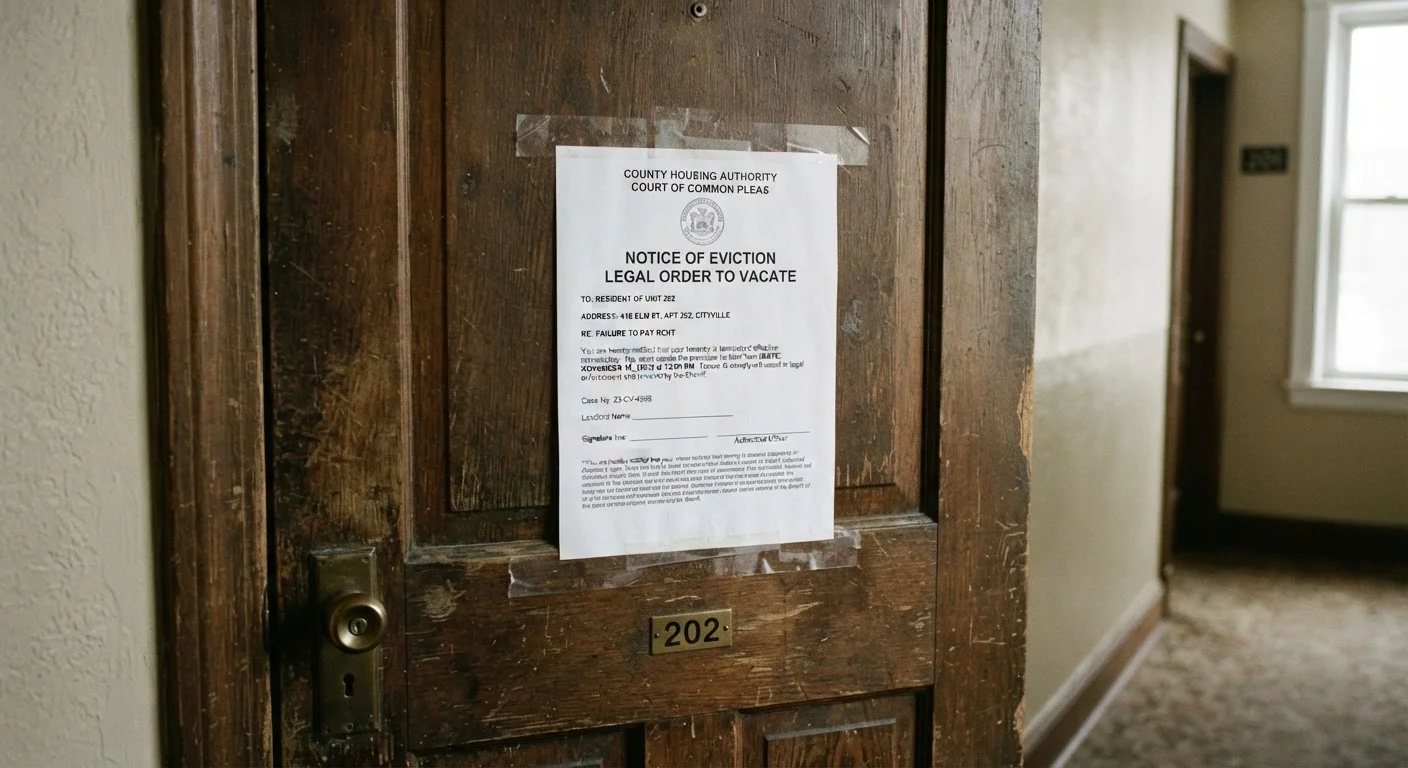
Eviction is the legal process by which a landlord formally removes a tenant from a rental property. It requires specific written notices, a court hearing, and - if the tenant does not comply - enforcement by a law enforcement officer. A landlord cannot legally remove a tenant by changing locks, removing belongings, or shutting off utilities.
The formal court proceeding is called an unlawful detainer action in many states, though terminology varies by jurisdiction.
Why Eviction Follows a Legal Script
Eviction is not simply a landlord telling a tenant to leave - it is a court-supervised legal sequence with defined steps, required documents, and enforceable timelines. Both landlords and tenants have rights at each stage, and skipping any step can invalidate the entire proceeding. Understanding this process helps renters respond appropriately rather than assume they have no options.
As a starting point, it's worth knowing that many assumptions renters hold about landlord authority are legally incorrect. Our article on common renter rights misconceptions explores where those gaps in understanding tend to cause the most harm.
Stage One: Written Notice
Every eviction begins with a written notice delivered to the tenant. The type of notice depends on the reason for eviction:
- Pay-or-quit notice: Used for unpaid rent. The tenant has a set number of days - determined by state law - to pay in full or vacate.
- Cure-or-quit notice: Used for a fixable lease violation (such as an unauthorized pet). The tenant must correct the problem or leave within the notice period.
- Unconditional quit notice: Requires the tenant to vacate without the option to fix the issue - typically reserved for serious or repeated violations.
Notice periods commonly range from three to thirty days depending on the state and the violation type. Delivery method also matters: most jurisdictions require personal service or posting plus mailing. A notice that fails these technical requirements may be thrown out in court.
State-specific notice requirements vary considerably, so renters should look up the rules that apply in their jurisdiction.
Respond to Every Notice in Writing
Even if you believe the notice is invalid, document your response in writing and keep a copy. Correspondence showing you disputed an improper notice or offered to pay can be important evidence if the case goes to court. Never ignore a notice hoping it will go away.
Stage Two: Filing and the Court Hearing
If the tenant does not comply with the notice - by paying, curing the violation, or vacating - the landlord may file an eviction lawsuit, often called an unlawful detainer action. The tenant is served with a court summons and given an opportunity to respond in writing.
At the hearing, both parties present their case before a judge. Tenants can raise legal defenses, which may include:
- The landlord failed to maintain habitable conditions
- The notice was procedurally defective
- The eviction is retaliatory (e.g., following a complaint about repairs)
- The landlord accepted rent after issuing the notice, which can waive their claim
If the judge rules in the landlord's favor, a writ of possession is issued - a legal document authorizing law enforcement to remove the tenant if they do not leave voluntarily.
~3.6M
Eviction filings per year in the U.S.
According to the Eviction Lab at Princeton University, approximately 3.6 million eviction cases are filed annually in the United States in a typical pre-pandemic year.
77%
Eviction cases where tenants lack legal representation
Research published by the National Coalition for a Civil Right to Counsel found that the vast majority of tenants face eviction proceedings without an attorney, compared to most landlords who have legal counsel.
Stage Three: Lockout and Its Limits
The final stage - physical removal - can only occur after law enforcement executes the writ of possession. The landlord cannot personally remove a tenant's belongings or change the locks before this point. Doing so constitutes an illegal eviction and can result in the landlord owing the tenant damages.
Once the writ is executed, the tenant must vacate. In many states, they have a short window - sometimes 24 to 72 hours after the officer posts notice - to remove their belongings before the landlord may dispose of them, though specific rules vary by jurisdiction.
An eviction judgment can also affect a tenant's ability to rent in the future. Court records are often public, and tenant screening companies may report them. Understanding your rights before things escalate is one of the most practical steps a renter can take.
This article provides general legal information about the eviction process for educational purposes only and does not constitute legal advice. Eviction laws vary significantly by state and locality. Renters facing eviction proceedings should consult a licensed attorney or local legal aid organization for guidance specific to their situation.