

Key Takeaways
Pet Policy in Rental Housing
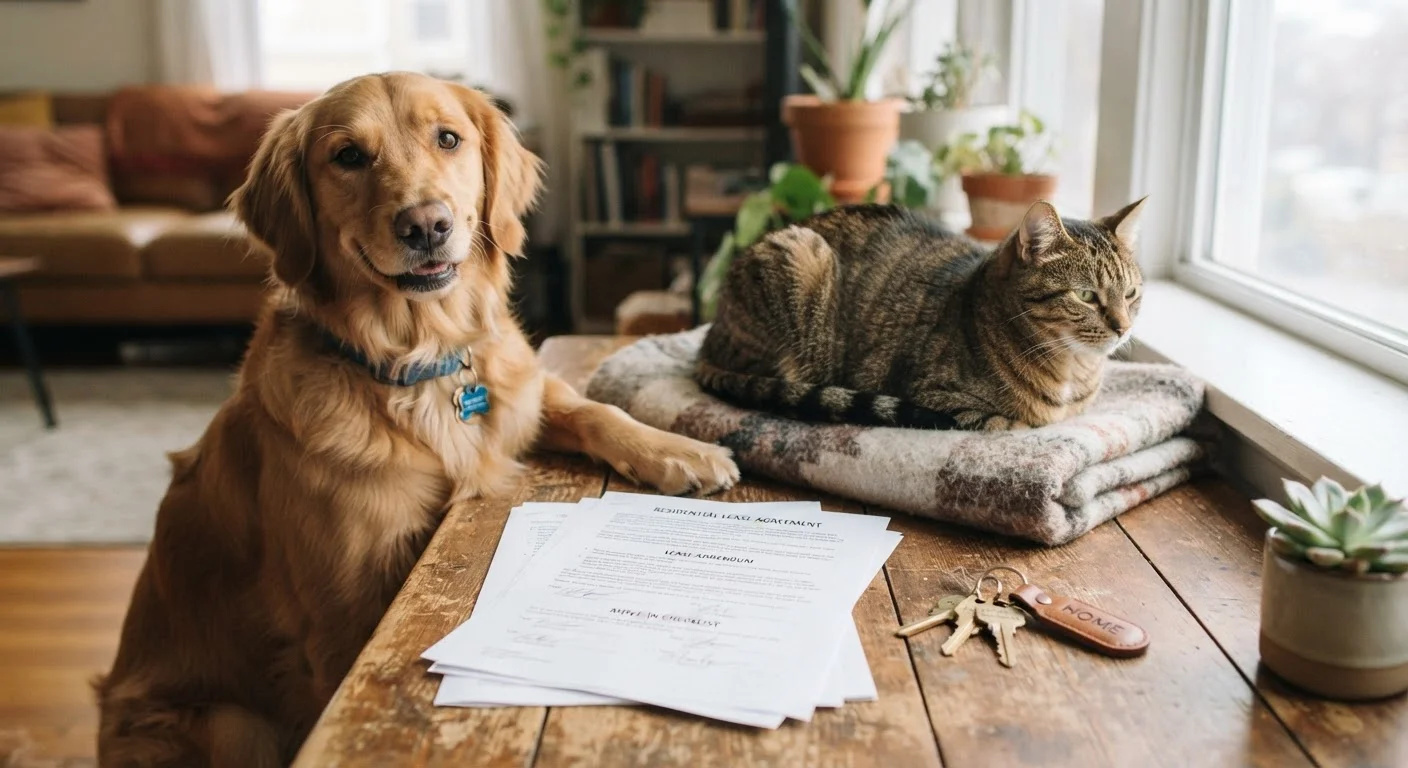
A pet policy is a landlord's set of rules governing whether tenants may keep animals in a rental unit, and under what conditions. These rules can include outright prohibitions, breed or weight restrictions, additional deposits, and monthly pet fees. Pet policies are part of the lease agreement and are generally enforceable as written, within the limits of state and local law.
Assistance animals - including service animals and emotional support animals - are legally distinct from pets under the Fair Housing Act and are generally exempt from no-pet policies and pet fees, though landlords may request documentation.
What Landlords Are Legally Allowed to Require
Landlords in the United States have broad legal authority to set pet policies as a condition of tenancy. With limited exceptions, a private landlord may legally do all of the following:
- Ban pets entirely through a no-pet clause in the lease.
- Restrict pet types, such as limiting tenants to cats only or prohibiting large dogs.
- Impose breed or weight restrictions, often citing liability insurance requirements.
- Charge a pet deposit - a lump-sum payment held against potential pet-related damage.
- Charge monthly pet rent - an additional recurring fee on top of base rent.
- Require pet references or veterinary records as part of the application process.
These are contract terms, and like any lease provision, they are binding once signed. If you are navigating a lease for the first time, our ground-up renting guide walks through how to read and evaluate lease terms before you commit.
Ask About Pet Policy Before Applying
Many application fees are non-refundable. Before paying to apply for a unit, confirm the landlord's full pet policy - including deposit amounts, pet rent, weight limits, and approved species. A quick conversation upfront can save you money and time if the property's terms don't fit your situation.
The Critical Exception: Assistance Animals
The most important legal limit on landlord pet authority comes from the Fair Housing Act (FHA), a federal law that prohibits housing discrimination based on disability, among other protected classes. Under the FHA, assistance animals fall into two categories:
- Service animals - typically dogs trained to perform a specific task for a person with a disability (e.g., guiding someone who is blind).
- Emotional support animals (ESAs) - animals that provide therapeutic benefit to a person with a documented mental or emotional disability.
Neither category is legally treated as a "pet." A landlord who enforces a no-pet policy against a tenant's legitimate assistance animal may be engaging in illegal disability discrimination. Landlords may request reliable documentation - such as a letter from a licensed healthcare provider - but cannot demand extensive medical records or charge pet deposits for assistance animals.
It is worth noting that the rules differ slightly across housing types. Properties with four or fewer units where the landlord lives on-site are exempt from some FHA provisions. Always verify how federal and state rules apply to your specific situation. Our state-by-state tenant rights reference is a useful starting point for understanding local protections.
State and Local Laws Can Expand Renter Protections
While federal law sets a baseline for assistance animal protections, some states and cities go further - for example, limiting the documentation landlords may request for ESAs, or restricting breed-specific bans in rental housing. Rules in California, New York, and several other states differ meaningfully from the federal minimum. Always check your specific jurisdiction before assuming federal rules are the ceiling.
Pet Deposits, Pet Rent, and How the Money Works
Two financial mechanisms are commonly used when landlords do allow pets: pet deposits and pet rent. They serve different purposes and are governed by different rules.
Pet Deposits
A pet deposit is collected upfront and held in reserve against damage caused by the animal. Whether it is refundable depends on both the lease language and state law. In some states, a pet deposit is legally treated as part of the overall security deposit, meaning it is subject to the same return timelines and itemization requirements. In others, landlords may designate it as non-refundable from the outset. For a fuller picture of how deposit rules work, see our security deposit rules explainer.
Pet Rent
Pet rent is a monthly surcharge - often ranging from $25 to $100 or more per month, per pet, depending on market and property type - that is not refundable under any circumstances. It functions as compensation for the ongoing wear-and-tear risk a landlord accepts by permitting animals. Some landlords charge both a pet deposit and pet rent; others use one or the other. The total cost over a lease term can be significant, so factor it into your housing budget.
70%
U.S. households that own a pet
According to the American Pet Products Association's 2023-2024 National Pet Owners Survey, approximately 70% of U.S. households include at least one pet.
~55%
Rental listings that allow any pets
Surveys of major rental listing platforms consistently find that fewer than 60% of available units are listed as pet-friendly, limiting options for pet-owning renters.
$25-$100+
Typical monthly pet rent range
Pet rent amounts vary widely by market and property type; urban markets and newer buildings tend toward the higher end of this range.
Negotiating Pet Terms and Protecting Yourself
Pet policies are lease terms, and in some cases they are negotiable - particularly in slower rental markets or when a landlord is motivated to fill a unit. Strategies that may help include:
- Offering a larger pet deposit in exchange for permission to keep a pet in a no-pet building.
- Providing a "pet résumé" with veterinary records, references from prior landlords, and proof of renter's insurance that covers animal liability.
- Proposing a trial period with a written addendum specifying how the arrangement will be evaluated.
Whatever you negotiate, get every agreement in writing. A verbal promise from a landlord that you can have a pet is not enforceable if the signed lease says otherwise. Any change to pet terms should be documented in a formal lease addendum signed by both parties.
Also be aware that violating a no-pet clause - for example, secretly keeping a cat in a building that prohibits animals - is a lease breach. Depending on state law, a landlord may issue a notice requiring you to remove the animal or face eviction. Many renters are surprised by how strictly these provisions can be enforced. Our article on common misconceptions about renter rights covers this and other frequently misunderstood areas of tenancy law.