

| Peak muscle mass | Typically around age 25-30 (American College of Sports Medicine) |
| Rate of muscle loss (sarcopenia) | Roughly 3-8% per decade after 30, accelerating after 60 (Journal of Aging Research) |
| Recommended weekly aerobic activity (adults) | 150-300 min moderate-intensity or 75-150 min vigorous-intensity (U.S. Department of Health and Human Services Physical Activity Guidelines) |
| Strength training recommendation | At least 2 days per week for all adults (U.S. Department of Health and Human Services Physical Activity Guidelines) |
| Balance training importance | Strongly recommended for adults 65+ to reduce fall risk (CDC Older Adult Falls Data) |
| Bone density peak | Generally reached in the late 20s to early 30s (National Institutes of Health) |
Why Age Changes Your Relationship With Exercise
Physical activity is one of the most consistently supported pillars of long-term health - but the form it takes, and the goals it serves, naturally shift as the body changes over time. Bone density, muscle mass, cardiovascular capacity, hormonal balance, and recovery speed all follow predictable patterns across the decades. Understanding those patterns helps you set realistic expectations and choose movement that actually fits your life right now.
This isn't about doing less as you age. It's about doing the right things with intention. For a grounding reference on the main categories of exercise and how they work, see A Plain-Language Guide to the Major Types of Exercise.
| Peak muscle mass | Typically around age 25-30 (American College of Sports Medicine) |
| Rate of muscle loss (sarcopenia) | Roughly 3-8% per decade after 30, accelerating after 60 (Journal of Aging Research) |
| Recommended weekly aerobic activity (adults) | 150-300 min moderate-intensity or 75-150 min vigorous-intensity (U.S. Department of Health and Human Services Physical Activity Guidelines) |
| Strength training recommendation | At least 2 days per week for all adults (U.S. Department of Health and Human Services Physical Activity Guidelines) |
| Balance training importance | Strongly recommended for adults 65+ to reduce fall risk (CDC Older Adult Falls Data) |
| Bone density peak | Generally reached in the late 20s to early 30s (National Institutes of Health) |
Your 20s: Building the Foundation
The twenties are typically the peak decade for physical capacity. Muscle mass, bone density, lung capacity, and recovery speed tend to be at or near their lifetime highs. This makes it an optimal window to build cardiovascular fitness and muscular strength - not because youth is wasted on the young, but because adaptations happen quickly and the body handles training loads well.
Key priorities in this decade include establishing consistent aerobic habits, developing foundational strength, and - critically - building the behavioral infrastructure of regular exercise. Research consistently shows that activity patterns formed in early adulthood are strong predictors of lifelong fitness. If you're just getting started, getting active without a gym background is entirely realistic at any starting point.
One underappreciated priority in the 20s: sleep and recovery. High effort without adequate recovery is a common pattern that raises injury risk and undermines long-term progress.
Your 30s and 40s: Maintaining Momentum Through Life Demands
Physiological changes in the 30s are gradual - muscle mass begins a slow decline (a process called sarcopenia) and metabolism shifts modestly. But the bigger challenge in this decade is often logistical: careers, family, and competing demands compress available time. Consistency matters more than intensity here.
Resistance training becomes increasingly important from the 30s onward to counter gradual muscle loss. Aerobic fitness remains essential for cardiovascular and metabolic health. Flexibility and mobility work - often neglected in youth - start paying dividends in injury prevention and functional comfort.
In the 40s, hormonal changes begin to be more noticeable. Estrogen and testosterone levels shift, affecting body composition, energy, and recovery time. Workouts may take longer to recover from, which means programming rest days deliberately rather than reactively. Many people find that debunking unhelpful beliefs about exercise helps them stay consistent - common fitness myths worth examining often hold people back in this stage.
Your 50s, 60s, and Beyond: Shifting the Goal Posts
From the 50s onward, preserving function becomes the central fitness goal. Bone density declines accelerate - particularly after menopause - making weight-bearing exercise and resistance training important for fracture prevention. Balance training becomes increasingly relevant, as fall risk rises with age and falls are a leading cause of injury-related health complications in older adults.
The good news is that exercise remains powerfully beneficial at every age. Studies consistently show that older adults who engage in regular physical activity maintain greater independence, cognitive function, and quality of life. Even beginning a structured exercise program in the 60s or 70s produces meaningful health gains.
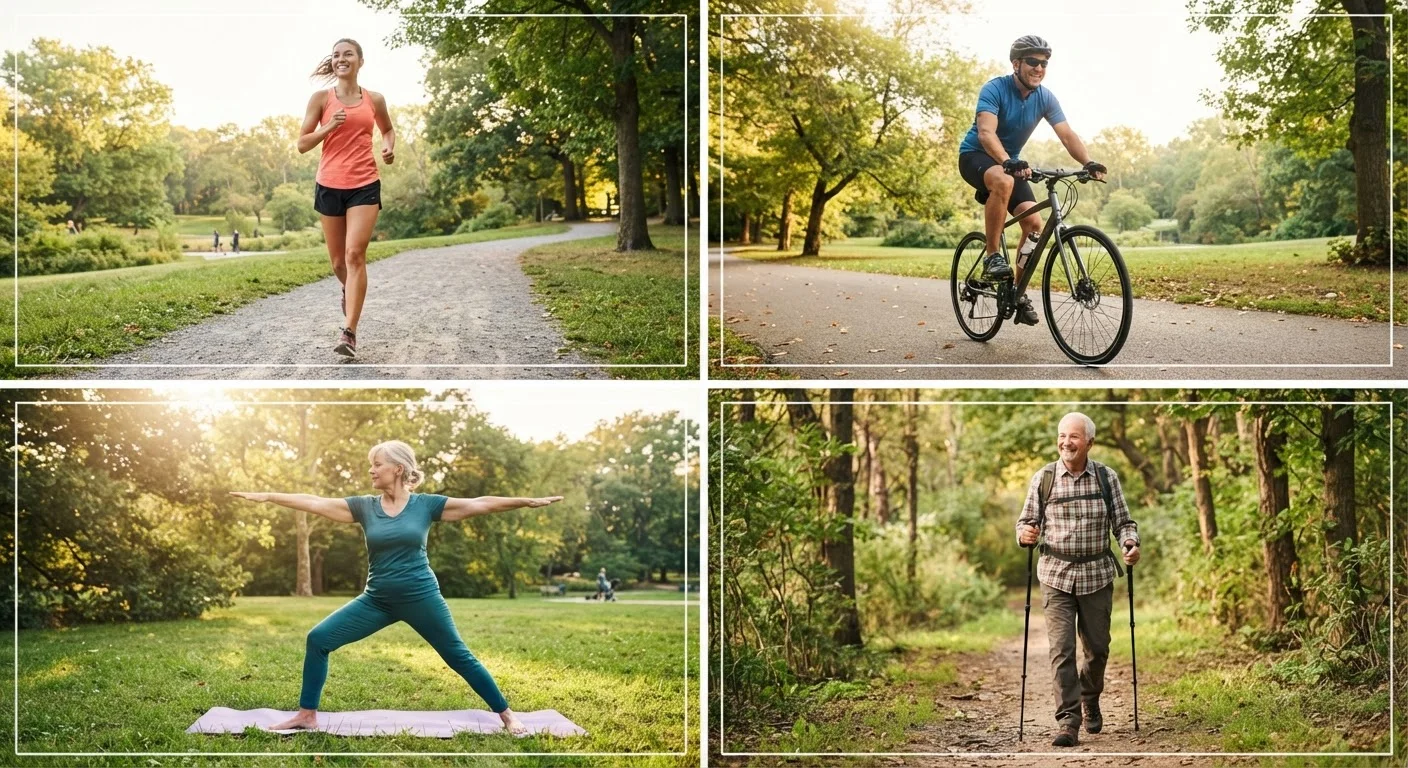
Low-impact options - swimming, cycling, walking, chair yoga - can support cardiovascular health and mobility with reduced joint stress. Walking as a form of exercise is particularly well-studied in older populations and remains one of the most accessible options available.
Anyone managing chronic conditions, recent injuries, or significant deconditioning should consult a qualified healthcare provider or physical therapist before beginning or significantly changing an exercise program.
This article provides general health education and is not a substitute for personalized medical advice. Always consult a qualified healthcare professional before making changes to your exercise routine, particularly if you have existing health conditions.