

Key Takeaways
Personal Budget
A personal budget is a written or digital plan that maps your expected income against your expected expenses over a set period - typically one month. It tells you, in advance, where your money is going so you can make deliberate choices rather than reactive ones. Think of it as a financial roadmap you create before the month begins, not a report card you receive afterward.
In formal personal finance, a budget is distinct from a spending tracker: a budget is prospective (planned), while tracking is retrospective (recorded). Both are useful, but they serve different functions.
The Core Idea: A Plan, Not a Cage
A personal budget is, at its most basic, a spending plan. You estimate how much money will come in during a given period and then decide - deliberately, in advance - how to allocate it. That's it. There's no requirement that it be rigid, punishing, or built around sacrifice.
The confusion often starts with language. People use the word "budget" to mean different things: a spending limit imposed from outside, a sign of financial struggle, or a complex spreadsheet only accountants could love. None of those definitions is accurate. A budget is simply a decision-making tool - one you control entirely.
What makes a budget distinct from just watching your spending is its prospective nature. You build it before the month starts, not after money has already left your account. That forward-looking quality is what gives a budget its power. For a plain-English rundown of the vocabulary involved, see budgeting terms every American should know.
What a Budget Is Not
Misconceptions about budgeting are widespread - and they stop many people from ever starting. Here are the most common ones, corrected:
- It's not a punishment. A budget doesn't tell you that you spend too much on takeout or coffee. It simply shows you where your money goes so you can decide if that reflects your priorities.
- It's not only for people with money problems. People at every income level - from those just getting by to high earners - use budgets to stay intentional with their finances.
- It's not a one-time document. A budget that never gets updated is quickly useless. It's a living plan that should flex as your income and expenses change.
- It's not the same as being cheap. A budget can include generous spending on the things you value. In fact, budgeting often creates more room for the spending that matters to you by reducing waste on things that don't.
For a fuller exploration of these myths, common budgeting myths corrected breaks them down with context and evidence.
Start Simpler Than You Think You Should
Many people delay budgeting because they want to build the perfect system first. A one-page list of income and expenses - even hand-written - is a real, functional budget. Start simple, then refine it as you go. Consistency beats complexity every time.
The Two Essential Ingredients
Every personal budget, no matter how simple or sophisticated, relies on the same two inputs:
- Income: The money coming in - your take-home pay after taxes, any side income, freelance earnings, or benefits. Budgets work best with net income (what actually lands in your account), not gross salary.
- Expenses: Everything you spend or plan to spend, broken into categories. These typically include fixed costs (rent, insurance, loan payments) and variable costs (groceries, utilities, entertainment).
The relationship between these two numbers is what makes a budget meaningful. If your planned expenses equal your income, every dollar has a job. If expenses exceed income, the budget reveals a gap that needs addressing. If income exceeds expenses, the surplus becomes an opportunity - for saving, investing, or paying down debt.
~33%
Americans who follow a detailed household budget
According to Gallup polling data, only about one in three Americans reports maintaining a detailed household budget, despite widespread acknowledgment that budgeting helps.
65%
Americans living paycheck to paycheck at some point
Various surveys, including those by the American Payroll Association, have found that a significant majority of U.S. workers report living paycheck to paycheck at least occasionally, regardless of income level.
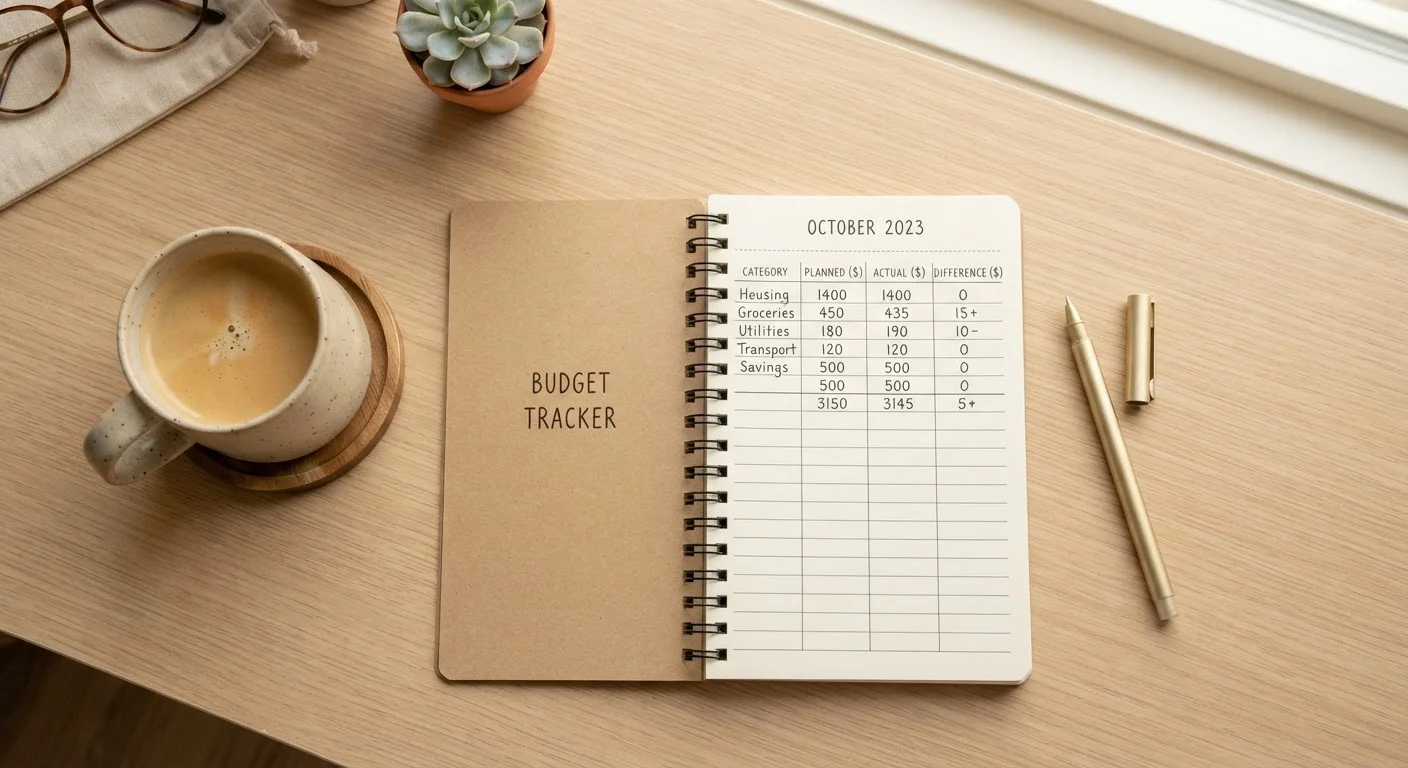
A budget doesn't require a specific tool or format. A notebook works. So does a spreadsheet, an app, or even a simple two-column list. The format matters far less than the habit of doing it consistently. If you're building your first one from scratch, this ground-up guide to your first personal budget walks through the process in plain terms.
Why It Matters Over Time
A budget's real value compounds the longer you use it. In the first month, it mainly gives you clarity - a clearer picture of your financial reality than most people have ever seen. Over several months, patterns emerge: the irregular expenses you forgot to plan for, the categories where you consistently overspend, the savings that quietly accumulate when spending is intentional.
Research in behavioral finance consistently finds that people who plan their spending in advance tend to make more financially sound decisions than those who make spending choices in the moment. This isn't about willpower - it's about removing the need for willpower by deciding ahead of time.
For a balanced look at what consistent budgeting actually produces over time - benefits and limitations alike - what happens when you budget consistently offers a grounded, evidence-based overview.
This article is for general informational and educational purposes only and does not constitute personalized financial advice. For guidance specific to your financial situation, consider consulting a qualified financial professional.