

Key Takeaways
Option A
The 50/30/20 Rule
The flexible, beginner-friendly percentage framework.
Best for: People who want a simple, low-maintenance structure that handles irregular spending without constant tracking.
Option B
Zero-Based Budgeting
The precise, detail-driven method for intentional spenders.
Best for: People who want total visibility into every dollar and are willing to invest time in detailed monthly planning.
If you're new to budgeting and want a quick, workable structure
The 50/30/20 Rule
The broad categories make it easy to start without spending hours categorizing every transaction. It instills healthy spending ratios without overwhelming beginners.
If you have variable income or irregular monthly expenses
Zero-Based Budgeting
Building a fresh budget each month lets you account for income fluctuations and seasonal costs precisely, rather than relying on fixed percentages that may not fit.
If you want to aggressively pay down debt or hit a major savings goal
Zero-Based Budgeting
Assigning every dollar a purpose forces you to consciously allocate money toward debt or savings before discretionary spending can absorb it.
If you have a stable income and consistent monthly costs
The 50/30/20 Rule
Predictable income and expenses mean the percentage targets stay reasonably accurate month to month, requiring minimal recalibration.
If you want deep insight into every spending category
Zero-Based Budgeting
Line-by-line planning reveals spending patterns that broad buckets can obscure, giving you granular control over where your money goes.
How Each Framework Works
Both methods are designed to answer the same fundamental question - where should my money go? - but they take very different approaches to answering it.
The 50/30/20 rule, popularized in personal finance literature, divides your monthly after-tax income into three broad buckets: 50% toward needs (housing, utilities, groceries, minimum debt payments), 30% toward wants (dining out, entertainment, subscriptions), and 20% toward savings and debt repayment beyond minimums. The framework is intentionally loose - it sets guardrails rather than prescribing exact line items. If you're new to personal finance, see a ground-up budgeting guide for the foundational concepts that underpin both approaches.
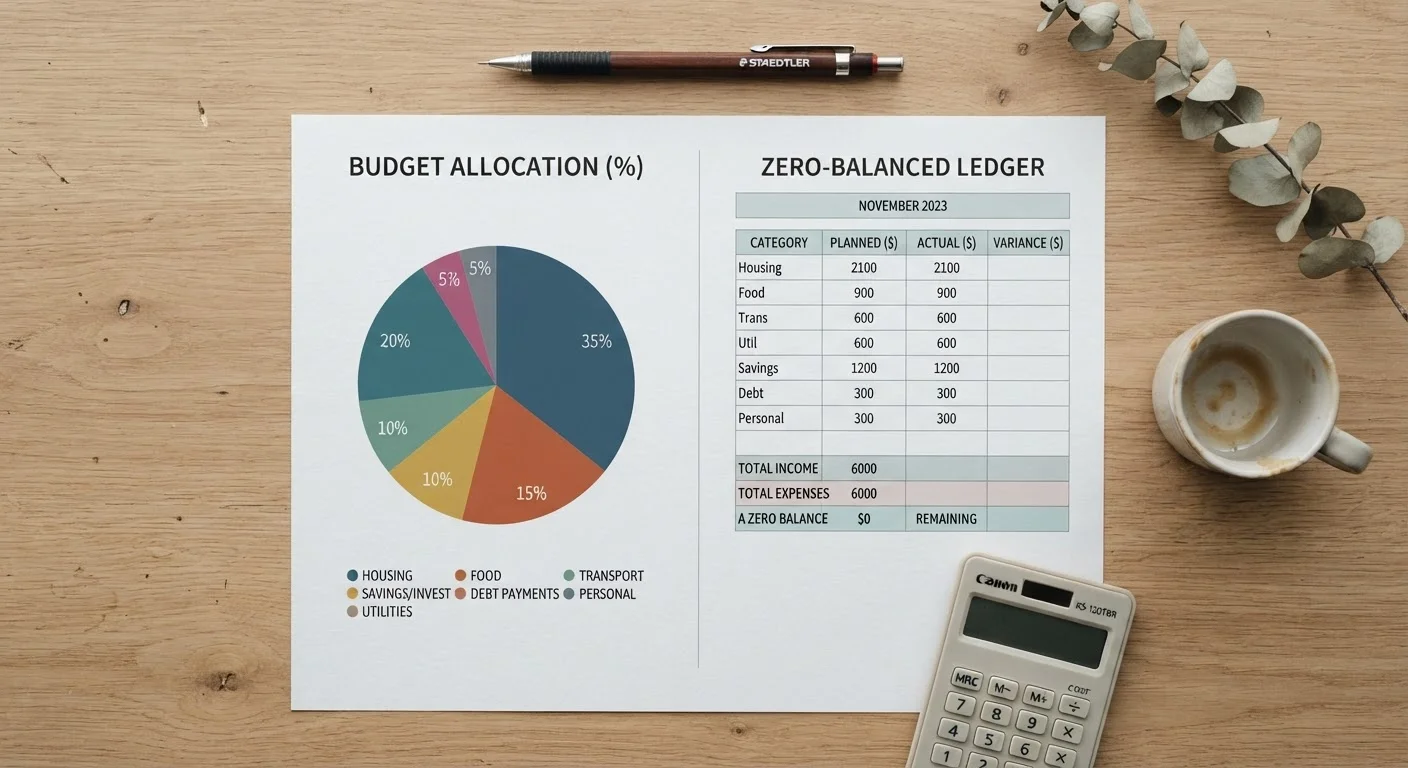
Zero-based budgeting (ZBB) starts from scratch each month. You list every anticipated dollar of income, then assign each dollar to a specific category - rent, groceries, car insurance, retirement contributions, entertainment - until income minus all assigned expenses equals exactly zero. Nothing is left unaccounted for. The discipline comes from building that plan before the month begins, then tracking against it throughout.
Side-by-Side Comparison
Understanding the structural differences between these two methods helps clarify which will work with your habits and lifestyle.
| Criterion | 50/30/20 Rule | Zero-Based Budgeting |
|---|---|---|
| Setup time | Minutes per month | One to two hours per month |
| Category detail | Three broad buckets | Granular line items |
| Best income type | Stable, salaried income | Variable or irregular income |
| Flexibility | High - percentages absorb variation | Moderate - rebuilt fresh each month |
| Visibility into spending | Broad overview only | Full, category-level transparency |
| Learning curve | Low | Moderate to high |
| Ideal for debt payoff | Partially - 20% bucket helps | Strong - debt gets its own line |
| Ongoing tracking effort | Minimal | Consistent, throughout month |
For a deeper look at how spending category design affects what your budget can reveal, see ways to categorize your spending.
Strengths and Limitations of Each Method
The 50/30/20 rule's chief advantage is accessibility. Because it uses just three categories, anyone can apply it within minutes of reviewing a pay stub. It accommodates lifestyle variation - a month with higher dining expenses doesn't require a budget rebuild, just a check that wants stayed near 30%. The limitation is precision: lumping all needs together can mask overspending in individual categories like housing or transportation, and the fixed percentages may not reflect high-cost-of-living realities where housing alone can consume far more than 50% of take-home pay.
Zero-based budgeting excels where detail matters. Every category is deliberately funded, which reduces mindless spending and surfaces hidden drains - streaming subscriptions, recurring app charges, and the like. Research in behavioral economics consistently shows that intentional, specific planning tends to improve financial follow-through compared to vague rules. The trade-off is time: building a line-item budget monthly and reconciling it requires meaningful ongoing effort, which some people find unsustainable.
This article provides general financial education and is not personalized financial advice. Consult a qualified financial professional for guidance specific to your situation.
Choosing the Right Method for Your Situation
No single budgeting method works for everyone, and the most effective framework is the one you'll actually use consistently. Consistent budgeting - regardless of the method - is strongly associated with improved savings rates and reduced financial stress over time.
Consider starting with the 50/30/20 rule if you have a predictable salary, manageable debt, and limited time for detailed tracking. Consider zero-based budgeting if you're self-employed, have variable income, or are working toward a specific goal like eliminating credit card debt or saving for a home down payment.
It's also worth noting these methods aren't mutually exclusive. Some people use the 50/30/20 rule as a high-level health check while applying zero-based thinking within individual categories. The monthly budget setup checklist can help you structure whichever approach you choose, and the complete household budget framework covers income tracking, debt allocation, and monthly review in greater depth.