

Key Takeaways
Following Distance
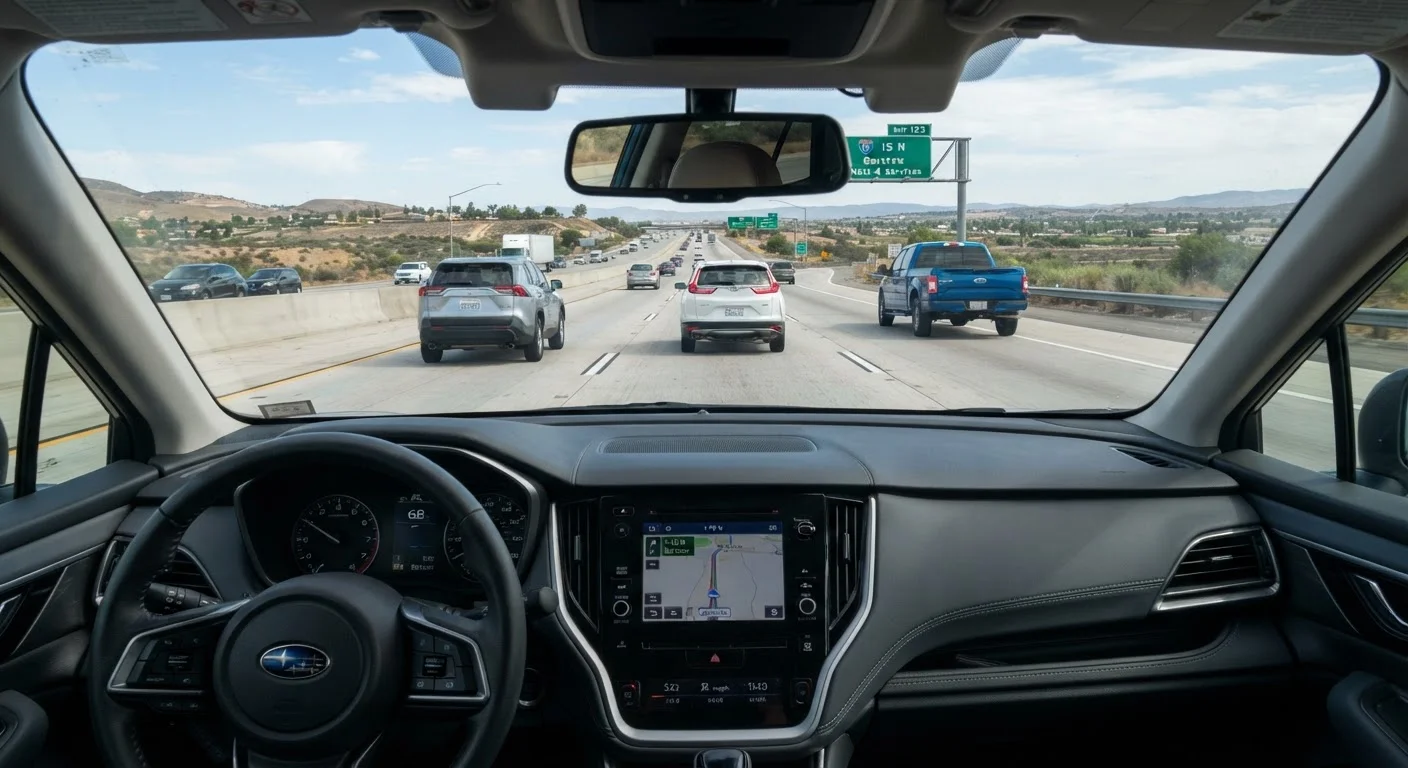
Following distance is the amount of space you leave between your vehicle and the one directly in front of you. At highway speeds, this gap determines how much time you have to react and brake before a collision. The widely taught "three-second rule" gives drivers a simple way to measure this gap using time rather than feet.
Stopping distance is the sum of reaction distance (the distance traveled before your foot hits the brake) and braking distance (the distance required to bring the vehicle to a full stop). Both increase significantly with speed.
Why Speed Changes Everything
Most drivers learn the three-second rule in driver's ed and consider the matter settled. But here's what that rule doesn't tell you: speed multiplies every part of the equation.
At 30 mph, your car travels 44 feet per second. At 70 mph - a common highway cruise speed - that jumps to roughly 103 feet per second. The average driver takes about 1.5 seconds to perceive a hazard and move their foot to the brake. That reaction time alone eats up about 155 feet at highway speed before your brakes even engage.
Then comes actual braking distance. On dry pavement with good tires, a modern car traveling at 70 mph typically needs an additional 180 to 200 feet to stop fully. Add those together and your total stopping distance can easily exceed 350 feet - more than the length of a football field.
Three seconds at 70 mph gives you about 309 feet. That's cutting it close under the best possible conditions. See also: The Complete Guide to Safe Driving in America for a broader look at stopping distances across different scenarios.
How to Actually Measure Your Gap
The three-second rule works because time is easier to judge than distance while moving. Here's how to use it correctly:
- Watch the vehicle ahead pass a fixed roadside object - a mile marker, overpass, or shadow line works well.
- Count one-one-thousand, two-one-thousand, three-one-thousand.
- If you pass that same fixed object before finishing the count, you're too close.
At 55 mph, three seconds equals about 242 feet. At 75 mph, it's around 330 feet. The number of feet changes, but your count stays the same - that's what makes this method practical.
For conditions that aren't ideal, bump your count up. Four seconds in rain. Five or six seconds when you're tired, driving a loaded vehicle, or following a large truck that limits your view of the road ahead.
Build the Habit Before You Need It
Practice the three-second count on every highway trip, even when traffic is light. Like any skill, it becomes automatic over time. When a real emergency happens, a habit you've built will kick in faster than a rule you're trying to remember.
What Tailgating Actually Costs You
Drivers sometimes follow closely because they feel it pressures slower traffic to move over, or because they want to shave seconds off a trip. Neither benefit holds up.
Research by traffic safety organizations consistently shows that tailgating offers no meaningful time savings on typical highway trips, while substantially increasing crash risk. A following gap of one second instead of three doesn't get you to your destination meaningfully faster - but it does reduce your available reaction time by two-thirds.
Rear-end collisions are among the most frequent crash types on U.S. highways. The National Highway Traffic Safety Administration (NHTSA) attributes a significant share of these crashes to following too closely. Many result in injury even at moderate speeds because the struck driver has no warning and cannot brace for impact.
Common driving myths - including the idea that close following is harmless on highways - are worth revisiting. Closing the gap is one of the most quietly dangerous habits American drivers have normalized.
When Three Seconds Isn't Enough
The three-second rule was designed for alert drivers on dry roads in good visibility. Several real-world conditions require more space:
- Wet or icy roads: Stopping distances can double on wet pavement and increase dramatically on ice. Double your following gap at minimum in rain.
- Large trucks: Semis take significantly longer to stop than passenger cars. Following a tractor-trailer too closely also blocks your view of traffic ahead - a dangerous blind spot known as the "no-zone."
- Fatigue or distraction: Tired drivers have slower reaction times. Add a second or two of buffer if you're not at your sharpest.
- Unfamiliar roads or low visibility: Night driving, fog, and unfamiliar routes give you less time to process what's ahead. More distance equals more options.
If you're merging into highway traffic and still calibrating your speed, merging safely is a separate skill worth building - following distance starts the moment you enter the lane.
~350 ft
Typical total stopping distance at 70 mph
Based on average reaction time of 1.5 seconds plus braking distance on dry pavement with standard tires.
2x
Stopping distance increase on wet roads
Wet pavement significantly reduces tire grip; many safety authorities recommend doubling following distance in rain.
~29%
Share of crashes involving rear-end collisions
According to NHTSA data, rear-end crashes are consistently one of the most common crash types on U.S. roads.